Context
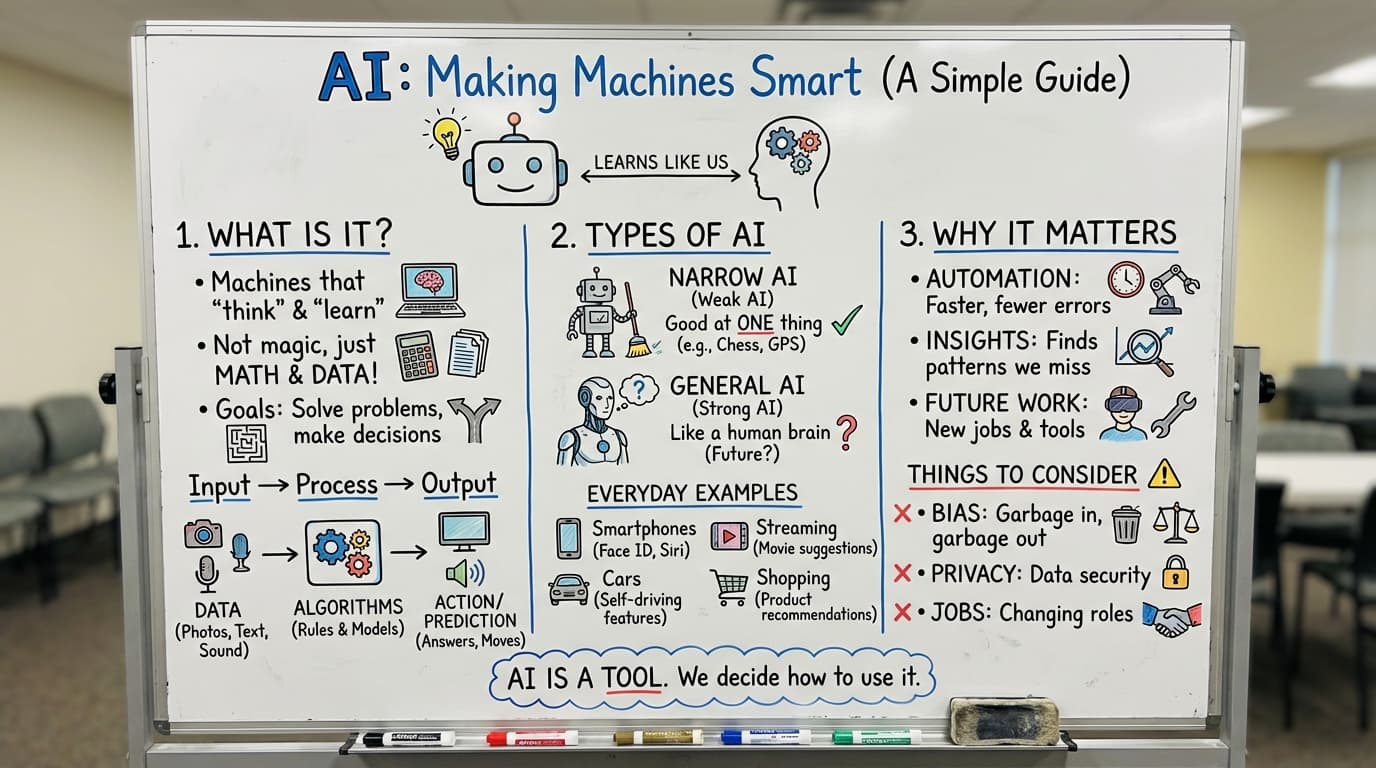
This visual was created to demystify AI for business stakeholders, product managers, and anyone entering the AI space. Too often, AI is presented as either mystical or overly technical—this guide finds the middle ground.
The "Input → Process → Output" model grounds AI in a simple mental framework that anyone can understand, while the "things to consider" section addresses the elephant in the room: bias, privacy, and workforce impact.
When to Use This Visual
Ideal for:
- Onboarding new team members to AI projects
- Executive presentations explaining AI fundamentals
- Workshops or training sessions for non-technical audiences
- Documentation for cross-functional teams
Target Audience:
- Business stakeholders with limited technical background
- Product managers exploring AI capabilities
- Leadership teams considering AI investments
- Anyone asking "What exactly is AI?"
Key Insights
AI Is a Tool, Not a Solution
The visual emphasizes that "AI is a tool. We decide how to use it." This framing is critical—AI doesn't solve problems by itself. It amplifies human decisions, for better or worse.
The Narrow vs. General Distinction Matters
Most enterprise AI today is Narrow AI: excellent at specific tasks (chess, GPS navigation, facial recognition) but unable to generalize. General AI—the sci-fi version that thinks like humans—is still theoretical and not relevant for current business planning.
Bias Isn't Optional to Address
"Garbage in, garbage out" isn't just a catchy phrase. If your training data reflects historical biases, your AI will perpetuate them. This must be addressed at the design stage, not retroactively.
Related Concepts
- RAG (Retrieval-Augmented Generation): How to make AI systems more accurate by grounding them in your enterprise knowledge
- MCP (Model Context Protocol): Standardizing how AI systems access context and data
- Governance Frameworks: Establishing guardrails for responsible AI deployment